The minute
Water-tech startup Crew Carbon, a 2022 Yale University spinout based in Connecticut, signed an offtake agreement with Microsoft for the delivery of up to 23,602 carbon removal units (CRUs).
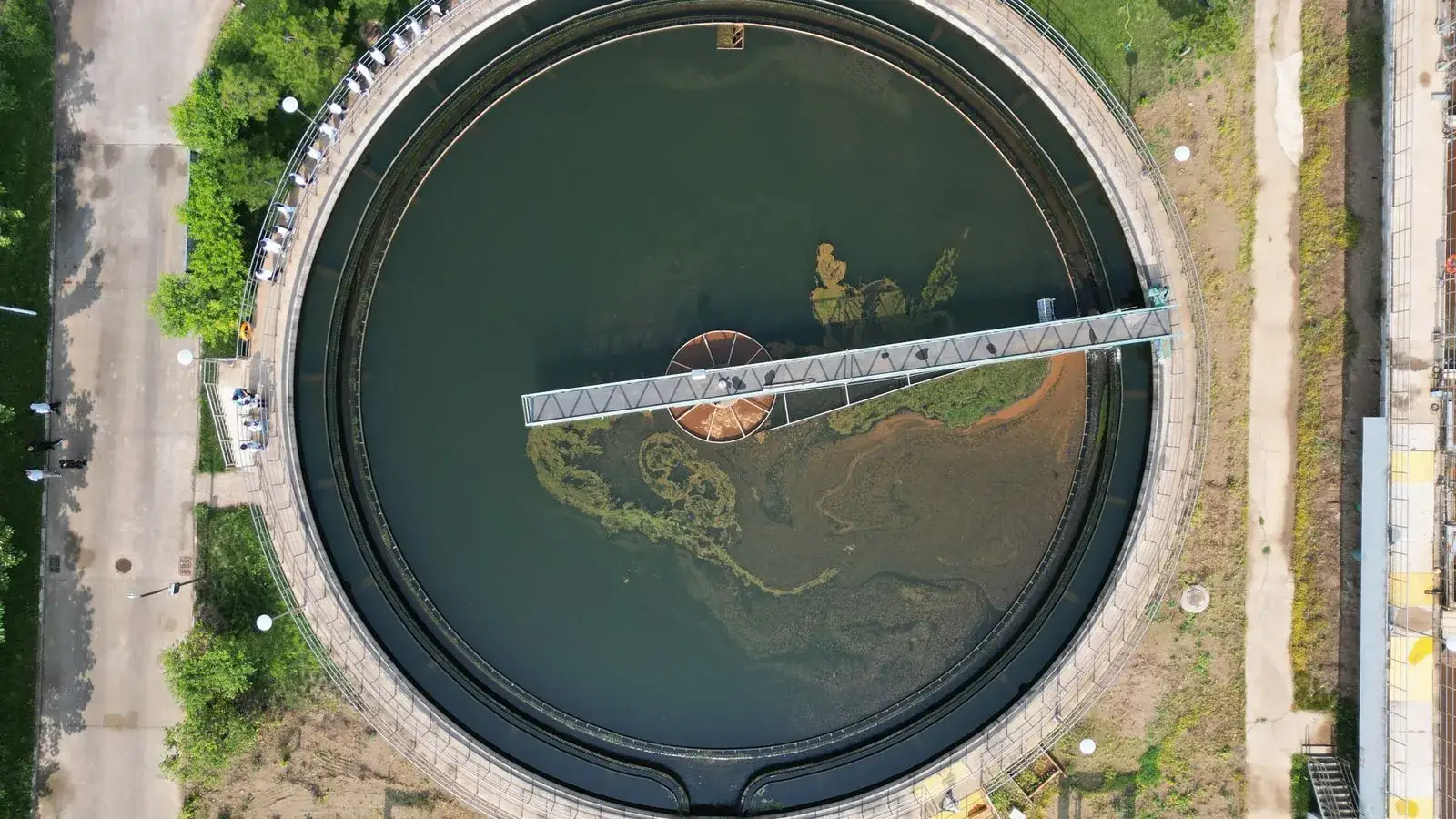
Crew Carbon’s Wastewater Alkalinity Enhancement (WAE) technology integrates into wastewater treatment facilities, using alkaline minerals including calcium carbonate to accelerate mineral weathering processes that permanently store atmospheric CO2.
The company says the process improves biological treatment performance while removing CO2 and superpollutant emissions, without requiring the extensive permitting typically needed for other carbon removal approaches.
Why it matters
The deal signals continued corporate demand for novel carbon dioxide removal (CDR) pathways, even as reports indicated Microsoft had paused some carbon removal purchases earlier in 2026. Wastewater-based approaches could expand the pool of viable CDR solutions by piggybacking on existing municipal infrastructure rather than requiring greenfield projects.
Crew Carbon CEO and co-founder Dr. Joachim Katchinoff called the agreement “a major milestone” that “further validates” the company’s approach to delivering durable carbon credits. Microsoft Carbon Removal Portfolio Director Philip Goodman said the offtake “supports the advancement of a novel, wastewater-based approach that is highly durable and measurable,” adding that “CREW has shown that carbon removal in the wastewater sector is implementable and scalable with high Monitoring, Reporting and Verification (MRV) certainty.”
How wastewater alkalinity enhancement works in practice
Enhanced mineral weathering is a well-documented carbon removal mechanism: certain alkaline minerals react with dissolved CO2 and convert it into stable bicarbonate ions that remain locked in water for thousands of years. In nature, this process takes geological timescales. Crew Carbon’s WAE technology compresses it by introducing strategically sourced alkaline minerals, such as calcium carbonate, directly into the controlled environment of a wastewater treatment plant.
The minerals optimize conditions such as pH and alkalinity within the treatment system. As wastewater flows through the facility, the elevated alkalinity accelerates the chemical reaction between dissolved CO2 and the mineral surfaces. The resulting bicarbonate is carried out with the treated effluent, effectively locking atmospheric carbon into a dissolved, stable form.
A key operational advantage is that the technology layers onto infrastructure that already exists and already processes large volumes of water. Crew Carbon states that wastewater treatment plants working with its technology process billions of gallons of water globally each day, providing what the company describes as a pathway to gigaton-scale carbon removal. Operators do not need to build new facilities or secure the federal permits and support often associated with other engineered carbon removal approaches such as direct air capture.
The process also delivers a co-benefit to plant operators: the pH and alkalinity adjustments improve biological treatment performance, meaning the facility’s core function (cleaning wastewater) works better with the WAE system installed than without it. That dual value proposition, carbon removal plus operational improvement, gives plant managers a practical reason to adopt the technology beyond climate commitments alone.
Microsoft’s shifting CDR strategy
The Crew Carbon agreement arrived after a period of uncertainty about Microsoft’s carbon removal spending. In April 2026, reports emerged that the tech giant had informed carbon credit suppliers it was pausing purchases. The Crew Carbon deal, announced in August, is one of several offtake agreements Microsoft has signed since that pause, suggesting the company recalibrated its approach rather than abandoned the market.
In its most recent Environmental Sustainability Report, Microsoft described a multi-approach CDR strategy organized around three tracks: pursuing long-term agreements for engineered and nature-based solutions that have reached relative maturity, investing in emerging early-stage pathways with smaller purchases to assess viability, scalability, and environmental and community impacts, and helping to de-risk emerging technologies while maturing monitoring, reporting, and verification (MRV) protocols. The Crew Carbon offtake fits the second and third tracks, as WAE is a relatively novel pathway that benefits from buyer commitment to prove out its MRV framework.
Brazil: wastewater infrastructure and carbon removal potential
Brazil operates thousands of wastewater treatment plants (known locally as ETEs, or Estações de Tratamento de Esgoto), many of which struggle with alkalinity and pH control, particularly in regions with naturally acidic water sources. The same mineral dosing that Crew Carbon uses in the United States addresses a real operational pain point in Brazilian facilities: low alkalinity reduces biological treatment efficiency, and operators already add lime or sodium bicarbonate to compensate. A WAE-style approach could replace or supplement those inputs while generating carbon removal credits.
The Brazilian regulatory environment for carbon credits is evolving. The country’s regulated carbon market legislation has been under development, and the voluntary carbon market is already active, with Brazilian projects trading on international registries. For a wastewater-based CDR pathway to operate in Brazil, operators would need to demonstrate compliance with environmental licensing requirements managed by state-level agencies (such as CETESB in São Paulo) and align their MRV protocols with whatever standards the eventual regulated market adopts.
The practical barrier is not technology but verification. Enhanced weathering in wastewater is measurable (bicarbonate concentrations in effluent can be tracked with standard water chemistry equipment), but establishing baseline emissions and proving additionality in facilities that already dose alkaline chemicals requires careful protocol design. Operators considering this pathway should expect MRV framework development to be the longest lead-time item.
What remains unresolved
Several open questions will determine whether wastewater-based carbon removal scales beyond early offtake agreements. First, permanence accounting: bicarbonate discharged into rivers and eventually the ocean is considered durable storage, but the scientific community is still refining how long “permanent” means in enhanced weathering contexts and how registries should credit it. Second, pricing: whether the co-benefit to plant operations (better biological treatment) will be enough to make WAE cost-competitive with other CDR methods without ongoing corporate offtake subsidies is untested at scale. Third, standardization: each carbon credit registry has its own methodology approval process, and WAE is new enough that methodology coverage is limited.
The most common mistake for operators evaluating wastewater-based carbon removal is treating it as a drop-in retrofit with no monitoring obligations. The carbon credits are only valuable if the removal is verified, and verification requires continuous measurement of influent and effluent chemistry, calibrated baselines, and third-party audits. Facilities that skip the MRV investment will generate alkalinity benefits but no sellable credits.
Full details of the announcement are available via ESG Today.
There is no newsletter yet. Leave your email and you will hear first on the day there is one.