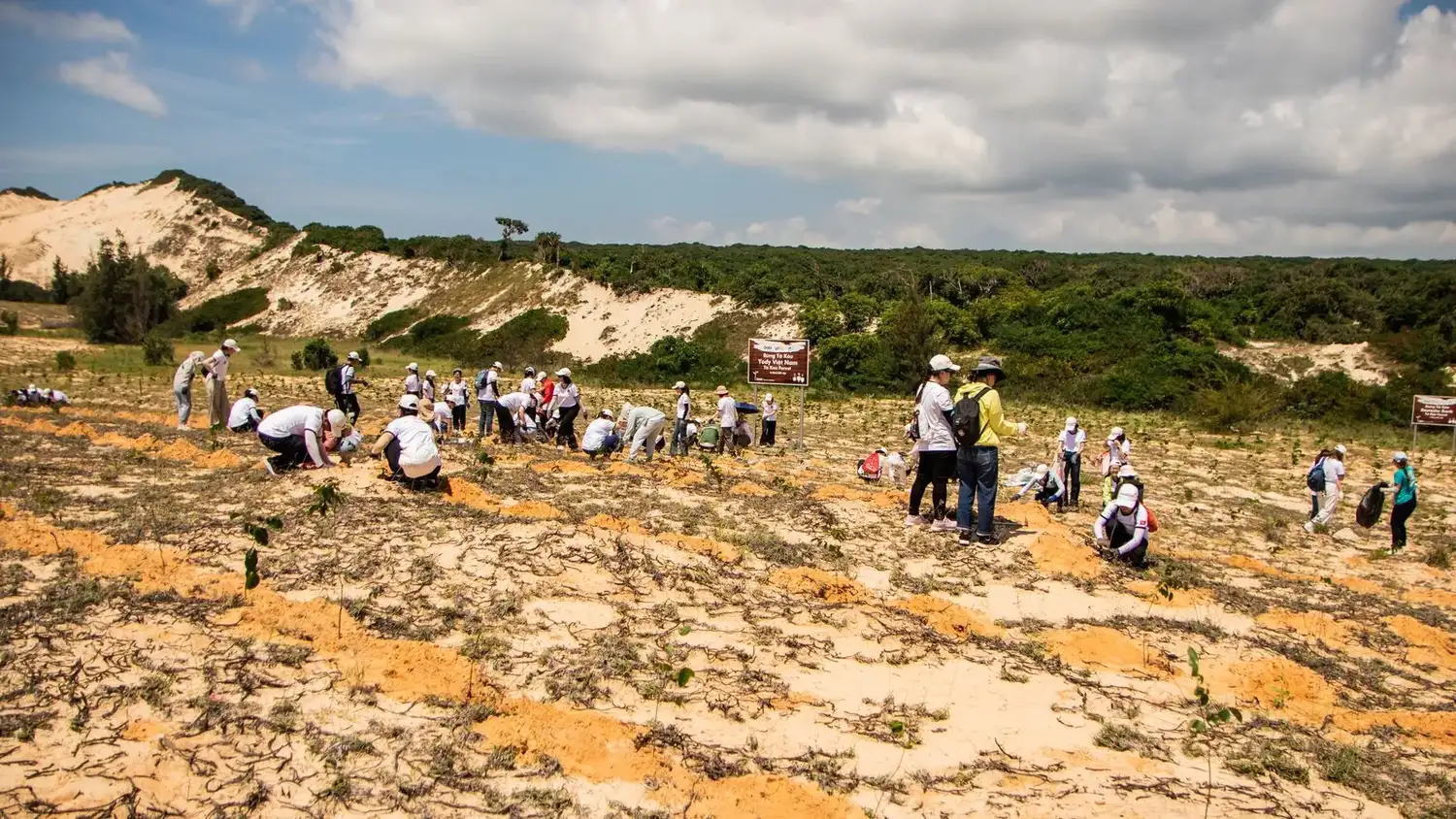
Definition
A carbon offset is a mechanism through which an entity compensates for its own greenhouse gas emissions by financing an equivalent reduction or removal of emissions elsewhere. The buyer does not eliminate the original emission; instead, it retires a verified carbon credit generated by a separate project, such as a reforestation initiative or a methane capture facility. One offset typically represents one metric tonne of carbon dioxide equivalent (tCO2e) avoided or removed from the atmosphere.
How it works in practice
The process follows a chain of steps that connects the emitter to the project delivering the environmental benefit.
- A project developer designs and implements an activity that reduces or removes emissions (for example, distributing efficient cookstoves in a region that relies on wood burning).
- An independent standard body (such as Verra’s Verified Carbon Standard or Gold Standard) reviews the project methodology, validates the baseline scenario, and registers the project.
- After the project operates for a defined monitoring period, a third party audits the actual emission reductions. The standard body then issues carbon credits to the project developer’s registry account.
- A company or individual that wants to offset its emissions purchases those credits on the voluntary carbon market, either directly from the developer or through a broker.
- The buyer retires the credit in the registry, which permanently removes it from circulation so that no one else can claim the same reduction.
Concrete example
A logistics company calculates that its fleet emitted 5,000 tCO2e in a given year. After investing in route optimization and fuel efficiency (which cut emissions by 1,200 tCO2e), the company still has 3,800 tCO2e it cannot yet eliminate through operational changes. It purchases and retires 3,800 carbon credits from a landfill gas capture project registered under a recognized standard. Each credit corresponds to one tonne of CO2e (carbon dioxide equivalent) avoided because the methane was captured and destroyed instead of escaping into the atmosphere. The company can then claim it has offset those residual 3,800 tonnes, provided the credits meet quality criteria such as additionality, permanence, and independent verification.
Offset vs. credit: the distinction that matters
The terms “carbon offset” and “carbon credit” are often used interchangeably, but they refer to different things. A carbon credit is the tradable unit, a certificate representing one tCO2e reduced or removed. An offset is the act of using that credit to compensate for an emission that occurred somewhere else. In short, the credit is the instrument; the offset is the transaction. A credit can be sold, held, or banked. It only becomes an offset when it is retired against a specific emission.
The most common mistake
The most frequent error is treating offsets as a substitute for emission reductions rather than a complement. The mitigation hierarchy, widely referenced in corporate climate frameworks, establishes a clear sequence: avoid emissions first, reduce what cannot be avoided, and only then compensate the residual through offsets. Companies that skip straight to purchasing credits without demonstrating measurable internal reduction efforts face growing scrutiny from regulators, investors, and civil society. Several high profile greenwashing allegations in recent years have centered precisely on this inversion, where the entity marketed itself as “carbon neutral” while its core operations continued to grow emissions unchecked.
A second common confusion involves the difference between avoidance credits and removal credits. An avoidance credit is generated by preventing emissions that would have occurred (protecting a forest from being cleared, for instance). A removal credit is generated by actively pulling CO2 out of the atmosphere (through direct air capture or biochar, for example). Both are legitimate, but they represent fundamentally different climate contributions, and many emerging corporate standards and regulatory proposals are beginning to require companies to disclose how much of their offset portfolio relies on each type.
How carbon offsets apply in Brazil
Brazil is one of the largest suppliers of carbon credits in the voluntary market, driven by its vast forest cover, its renewable energy matrix, and a growing pipeline of nature based solutions projects. The regulatory landscape has evolved significantly.
The Brazilian Emissions Trading System (SBCE)
Federal legislation established the Sistema Brasileiro de Comércio de Emissões (SBCE), a regulated carbon market framework. Under this system, regulated entities that exceed their emission caps can use offsets (within limits set by regulation) to meet compliance obligations. The system is administered with oversight from the federal government, and its implementing rules define which project types and standards qualify for generating eligible offset credits.
The voluntary market
Outside the regulated framework, Brazil hosts hundreds of voluntary market projects registered under international standards. The majority involve avoided deforestation (REDD+), reforestation, and regenerative agriculture. For international professionals dealing with Brazilian operations, it is important to note that land tenure documentation and community consent processes are critical due diligence items, given the complexity of land rights in the Amazon and Cerrado biomes.
Relevant institutions
Several Brazilian agencies interact with carbon offset activities:
- The Ministry of the Environment and Climate Change (MMA) sets national climate policy direction.
- IBAMA (the federal environmental enforcement agency) oversees environmental licensing that can intersect with offset project areas.
- The National Institute for Space Research (INPE) provides the deforestation and land use data that underpins baseline calculations for forest based offset projects.
International buyers sourcing offsets from Brazilian projects should verify that the project documentation aligns with both the international standard’s requirements and applicable Brazilian environmental and land use legislation.
Quality criteria to watch
Not all offsets deliver the same environmental integrity. The following criteria separate credible offsets from questionable ones:
- Additionality: the emission reduction would not have happened without the revenue from credit sales.
- Permanence: the carbon benefit is not easily reversible (a reforested area that burns down within five years raises permanence concerns).
- No leakage: the project does not simply shift emissions to another location (protecting one forest patch while deforestation moves to the adjacent patch).
- Conservative baseline: the scenario against which reductions are measured reflects what would realistically have occurred, not an inflated counterfactual.
- Independent verification: a qualified third party audits both the methodology and the monitored results before credits are issued.
Corporate buyers increasingly rely on credit rating agencies and integrity initiatives (such as the Integrity Council for the Voluntary Carbon Market, ICVCM) to assess whether specific credits meet these criteria before purchasing.
Primary sources: Verified Carbon Standard program (Verra, 2026); The Core Carbon Principles (ICVCM, 2023); Corporate Net-Zero Standard v1.3.1 (Science Based Targets initiative, 2026); Law 15,042 of 11 December 2024, creating the SBCE (Planalto, 2024).
There is no newsletter yet. Leave your email and you will hear first on the day there is one.