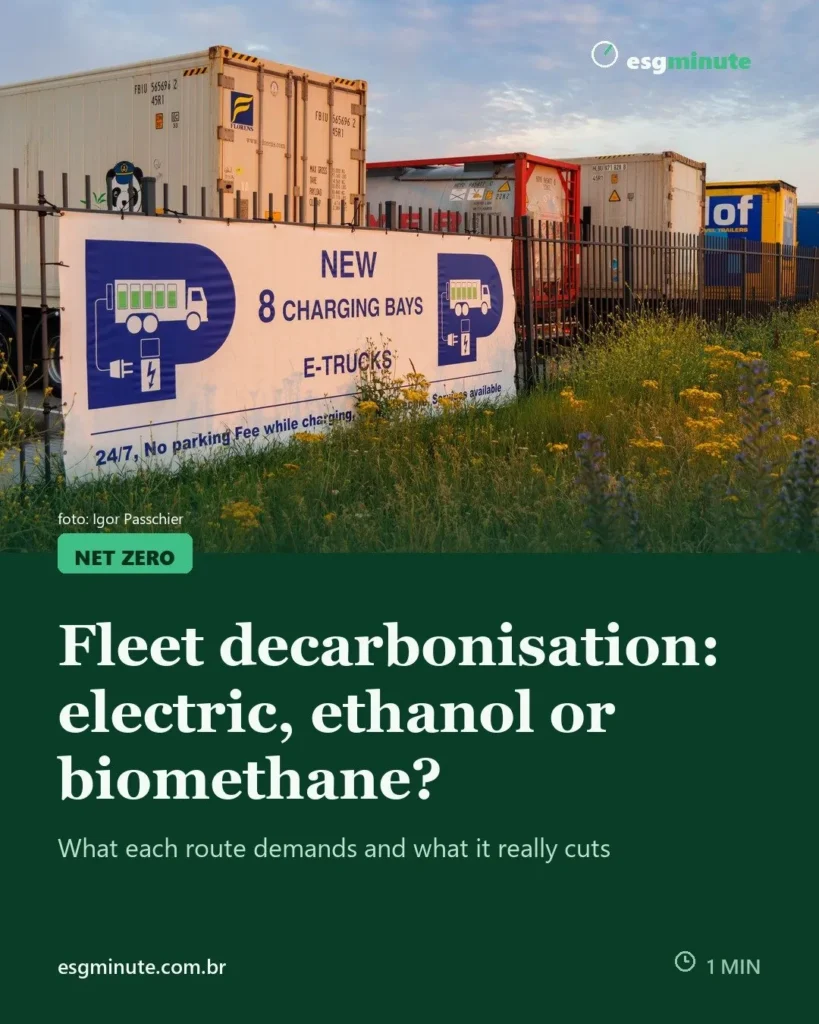
The minute
- Electric: the deepest cut per kilometre in Brazil, because the grid is clean; needs charging investment
- Ethanol: a meaningful cut without replacing the fleet, since most light vehicles are flex-fuel
- Biomethane: the heavy and agri route, where there is organic waste to digest
Why it matters: Fleet is usually the largest slice of scope 1, and the one place where a cut shows up quickly in next year’s inventory.
How to choose
Start with the duty cycle: short urban routes favour electric; heavy long-haul points to biomethane or renewable diesel; a flex light fleet can switch to ethanol today.
What to measure first
Litres per month by fuel, kilometres per vehicle and idle time. Without those, any electrification proposal is guesswork.
The inventory effect
The switch shows in scope 1 the following year. Ethanol carries a biogenic factor and cuts reported fossil emissions; electric shifts consumption to scope 2, which is small in Brazil.
Frequently asked questions
Does electric pay off in Brazil?
On intensive urban routes it usually pays on cost per kilometre; the bottleneck is upfront charging investment.
Does ethanol really cut emissions?
It cuts reported fossil emissions, being a biogenic fuel, and requires no fleet replacement for flex vehicles.
Is biomethane viable for small companies?
It is where there is own organic waste or a nearby supplier; otherwise logistics kill the case.
Read next: what scope 1 is.
Read next: renewable energy for companies.
Primary sources: GHG Protocol Corporate Accounting and Reporting Standard (WRI/WBCSD, 2004); CO2 emission factors for Brazil’s national grid (SIN), in Portuguese (MCTI, 2026).
There is no newsletter yet. Leave your email and you will hear first on the day there is one.