The minute
Form Energy raised $750 million in Series G funding led by T. Rowe Price, bringing total equity raised to over $2 billion.
New investors include Sequoia Capital, Janus Henderson, Franklin Templeton and PEAK6 Investments, joining existing backers such as Breakthrough Energy Ventures, TPG Rise Climate, GE Vernova, Prelude Ventures, Engine Ventures, Capricorn’s Technology Impact Funds, Coatue, Energy Impact Partners, NGP, Blindspot Ventures, M&G Catalyst Fund, Gigascale Capital, and Dustin Moskovitz and Cari Tuna.
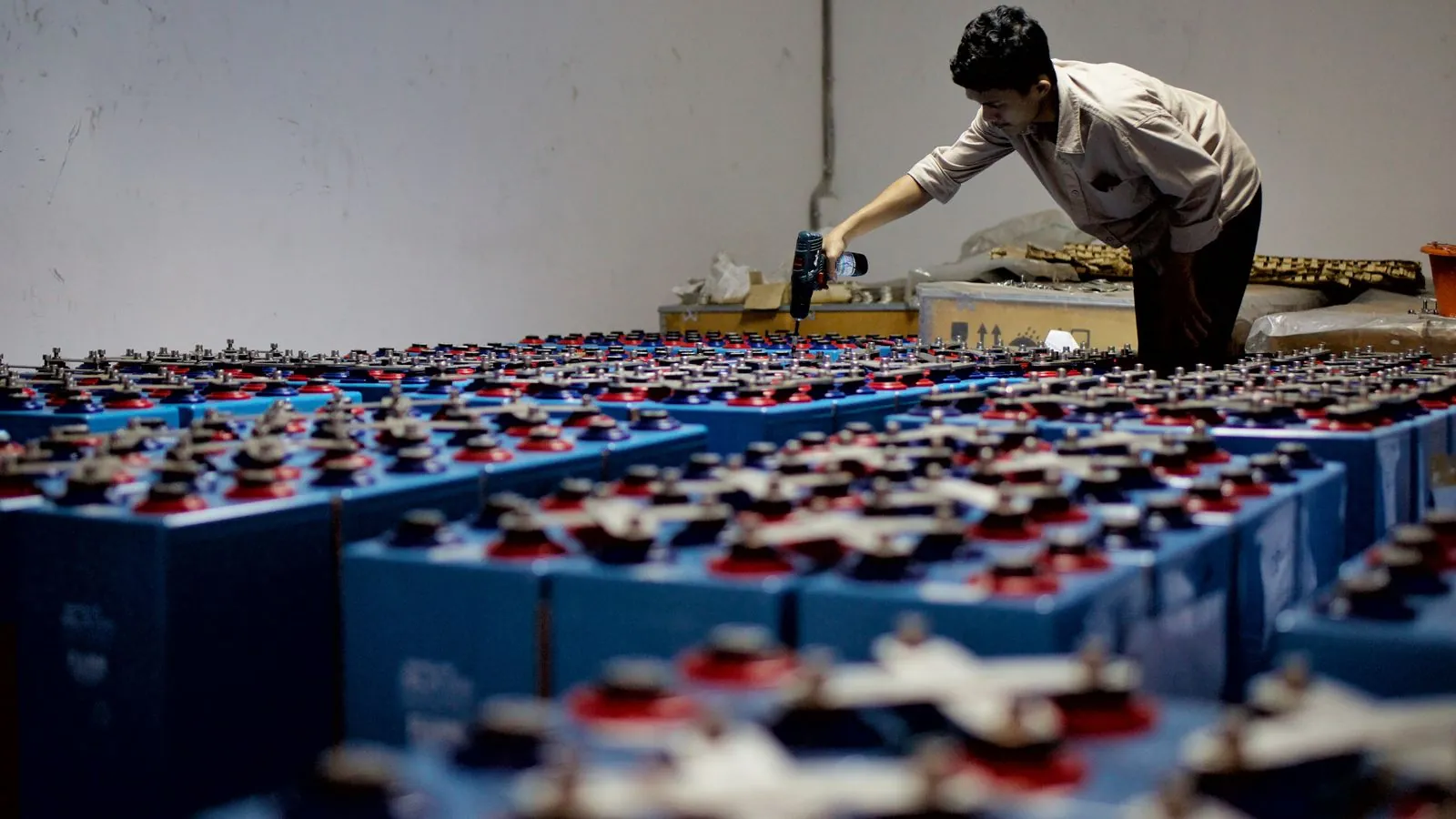
The company will use the proceeds to accelerate manufacturing scale-up at its Weirton, West Virginia facility and advance commercial deployments of its iron-air battery systems to meet growing demand for reliable, affordable multi-day energy storage.
Why it matters: Multi-day energy storage is considered a missing piece in grids that depend heavily on solar and wind. Form Energy’s iron-air batteries, capable of storing up to 100 hours of electricity, address extended periods of low renewable generation and extreme weather events, a gap that conventional lithium-ion systems (typically four hours) do not cover.
Founded in 2017 and headquartered in Somerville, Massachusetts, Form Energy has announced commercial agreements with Xcel Energy, Google, Crusoe and FuturEnergy Ireland. The Series G follows a $405 million Series F closed in October 2024, also led by T. Rowe Price. The entrance of institutional investors such as Sequoia Capital and Franklin Templeton signals growing mainstream financial interest in long-duration storage technologies.
How Iron-Air Batteries Actually Work
The chemistry behind Form Energy’s system relies on a reversible rusting process. During discharge, iron pellets are exposed to oxygen from the air and oxidize, releasing electrons that flow through an external circuit as electricity. During charge, an electrical current reverses the reaction, converting iron oxide back into metallic iron and releasing oxygen. The cycle repeats.
The active materials are iron, water, and air. All three are abundant and inexpensive compared to lithium, cobalt, or nickel found in conventional battery chemistries. That cost advantage is what makes 100-hour duration economically viable: storing electricity for days with lithium-ion would require enormous quantities of expensive cathode materials, making the price per kilowatt-hour prohibitive at that timescale.
The trade-off is round-trip efficiency. Iron-air systems lose a larger share of energy in each charge-discharge cycle than lithium-ion does. For a battery that cycles daily, that loss matters. For a system designed to discharge only a handful of times per year during prolonged weather events or seasonal generation dips, the low material cost per kilowatt-hour outweighs the efficiency penalty.
What This Means for Brazil
Brazil’s electricity grid relies heavily on hydropower, which supplies the majority of the country’s generation. That dependence creates a vulnerability: drought years have repeatedly forced the system to activate expensive thermal plants burning natural gas or diesel, raising costs and carbon emissions simultaneously.
The country’s Northeast has become a major wind generation corridor, and solar capacity has expanded across multiple states. Both sources are intermittent, and their output can drop for days during unfavorable weather. Multi-day storage could absorb excess renewable generation and release it during dry-season shortfalls or extended periods of low wind, reducing reliance on thermal backup.
ANEEL, Brazil’s electricity regulatory agency, has been developing a framework for energy storage, but the regulatory environment does not yet distinguish clearly between short-duration (four-hour) and multi-day technologies when it comes to grid service compensation. Until rules explicitly value the capacity to sustain discharge over days rather than hours, the economic case for deploying 100-hour systems in Brazil depends on bilateral contracts and specific project agreements rather than regulated tariff mechanisms. Operators considering storage projects should track ANEEL’s ongoing public consultations on the topic.
The Most Common Mistake in Evaluating Long-Duration Storage
The most frequent error among utilities and grid planners is sizing and pricing multi-day storage using lithium-ion assumptions. A four-hour battery is designed to cycle once or twice per day, and its economics depend on frequent arbitrage between peak and off-peak electricity prices. A 100-hour system serves a fundamentally different function: it acts as insurance against multi-day grid stress events that may occur only a few times per year.
Applying daily-cycling financial models to a technology built for infrequent, extended discharge leads to two predictable outcomes: undervaluing the system’s contribution to grid reliability and overestimating its per-cycle cost. Procurement teams that evaluate iron-air batteries with the same spreadsheet they use for lithium-ion projects will consistently reject proposals that would, under a reliability-based framework, prove cost-effective.
What Remains Unresolved
Several open questions will determine whether iron-air storage reaches widespread deployment.
Manufacturing scale
The Weirton facility is Form Energy’s first large-scale production site. Whether the company can hit projected cost targets depends on yield rates, supply chain stability for iron components, and the speed at which production lines ramp. The $750 million in new capital is directed at this challenge, but the transition from pilot manufacturing to volume production is where many hardware companies encounter delays.
Grid interconnection
Multi-day storage systems are physically large. In the United States, permitting and interconnection timelines for utility-scale energy projects remain a bottleneck. The queue of projects waiting for grid connection studies has grown across most regional transmission organizations, and long-duration storage must compete for limited interconnection capacity alongside solar, wind, and conventional battery projects.
Market design
Most US wholesale electricity markets compensate storage based on four-hour capacity products. Regulatory structures that properly value 100-hour duration are still being developed. Until grid operators create market mechanisms that pay for multi-day reliability (rather than short-duration peak shaving), the revenue streams available to iron-air systems will not fully reflect their grid value.
Full details via ESG Today.
There is no newsletter yet. Leave your email and you will hear first on the day there is one.