The minute
The Integrity Council for the Voluntary Carbon Market (ICVCM) approved two Verra methodologies as meeting Core Carbon Principles (CCP): VM0051 (Improved Management in Rice Production Systems, v1.1) and VMR0016 (Flaring or Use of Landfill Gas, v1.0). The approval was announced on August 12, 2026.
VM0051 credits projects that adjust water levels in flooded rice fields to reduce methane emissions, enabling smallholder farmers across Asia to access carbon financing while enhancing food security.
VMR0016 replaces previous methodologies (ACM0001 and AMS-III.G.) and becomes the standalone landfill gas methodology in the Verified Carbon Standard (VCS) Program. It broadens CCP label eligibility beyond the previous 10 megawatt electrical capacity limit for landfill gas-to-electricity projects and applies updated oxidation factors based on current science.
Why it matters
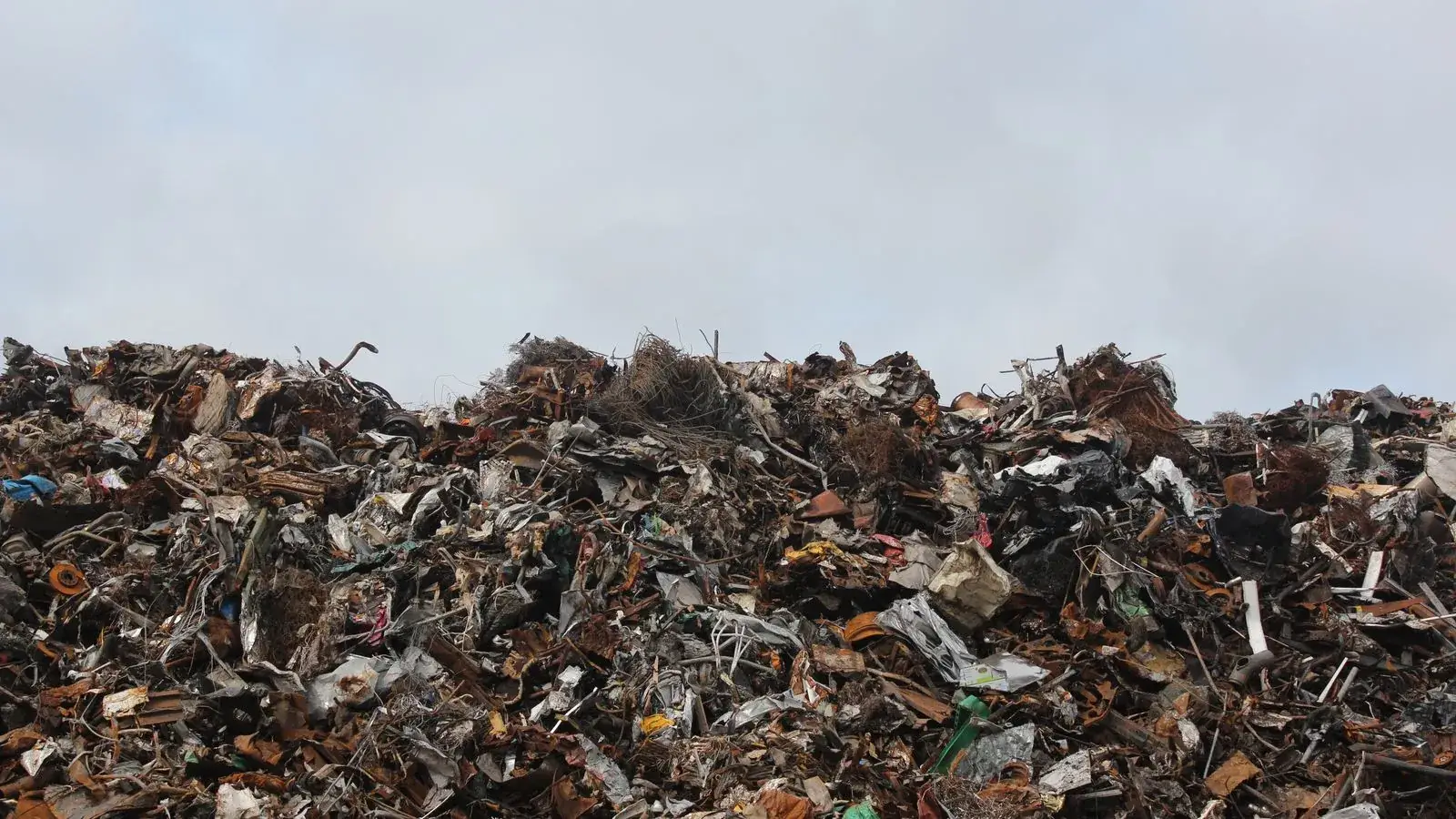
Methane is 28 times more powerful at trapping heat in the atmosphere than CO2, making rice paddies and landfills significant sources of greenhouse gas emissions. CCP-label eligibility signals that credits generated under these methodologies meet the highest integrity benchmarks in the voluntary carbon market, potentially increasing buyer confidence and demand.
Both methodologies target methane reduction through distinct pathways: VM0051 focuses on water management in rice cultivation, a sector critical to food security in Asia, while VMR0016 covers landfill gas capture for flaring, energy generation, or distribution through gas networks, with global applicability. Credits generated by projects using these methodologies become eligible for CCP labels upon meeting specified conditions. Full details are available via Verra.
How VM0051 Works in Practice
VM0051 quantifies emission reductions from improved water and crop management practices in flooded rice systems. The core intervention is adjusting water levels during the growing season. In conventional flooded rice cultivation, fields remain continuously submerged, creating anaerobic conditions where methane-producing microorganisms thrive. By allowing fields to dry periodically (a technique commonly known as alternate wetting and drying), farmers reduce the anaerobic window and, with it, methane generation.
The methodology requires project developers to establish a baseline of emissions under conventional flooding, then measure reductions achieved through the improved water regime. Smallholder farmers, who make up the majority of rice producers across Asia, can use the carbon finance generated to fund the transition to these lower-emitting practices. Beyond methane reduction, alternate wetting and drying also tends to reduce water consumption, a relevant co-benefit in regions facing increasing water stress.
How VMR0016 Consolidates Landfill Gas Standards
VMR0016 was developed to align with the Core Carbon Principles from the outset, replacing two older methodologies (ACM0001 and AMS-III.G.) as a single, updated standard. The methodology covers three distinct project types: flaring captured landfill gas, converting it to electricity or thermal energy, and supplying it to consumers through gas distribution networks, dedicated pipelines, or trucks.
A key structural change is the link to VT0009 (Combined Baseline and Additionality Assessment, v1.0), a new VCS additionality tool. VT0009 enables all landfill gas projects, regardless of scale, to claim CCP labels for the credits they generate. Under the previous framework, only landfill gas-to-electricity projects with a capacity equal to or below 10 megawatts electrical (MWe) were eligible to request CCP labels. This expansion matters for larger facilities and for projects that route gas to distribution networks rather than generating electricity on site.
Implications for Brazil
Brazil is one of the largest rice producers outside Asia, with flooded paddy systems concentrated in the southern region. VM0051’s framework for quantifying methane reductions from water management changes applies globally, meaning Brazilian rice projects could develop credits under this methodology if they meet VCS and CCP eligibility conditions.
On the landfill side, Brazil’s National Solid Waste Policy (Política Nacional de Resíduos Sólidos, Lei 12.305/2010) requires municipalities to phase out open dumps and adopt engineered landfills. Landfill gas capture infrastructure remains unevenly deployed across the country. VMR0016’s global applicability and its removal of the 10 MWe capacity ceiling could make CCP-labeled credits more accessible to Brazilian landfill operators seeking carbon finance to fund gas capture equipment. Project developers in Brazil would still need to navigate both VCS program requirements and any applicable national regulatory frameworks governing carbon credit generation.
Common Pitfalls for Project Developers
For VM0051, the most frequent error is inadequate monitoring of water levels. The methodology’s emission reduction claims depend on documented evidence that fields were drained on schedule. Projects that rely on self-reported farmer data without independent verification risk having credits challenged during auditing.
For VMR0016, a common mistake is applying outdated oxidation factors. The updated methodology specifically requires the use of current scientific values for methane oxidation in landfill cover soils. Projects that carry over assumptions from older versions of ACM0001 may overstate emission reductions and fail CCP eligibility review.
In both cases, the additionality demonstration remains a critical step. Project developers must show that the emission reductions would not have occurred without carbon credit revenue, a requirement that the new VT0009 tool aims to standardize but does not eliminate.
What Remains Unresolved
The ICVCM approval covers the methodologies themselves, but individual projects still require validation and verification by accredited third-party auditors before credits can carry CCP labels. The timeline and cost of this project-level review process remain significant barriers, particularly for smallholder rice cooperatives with limited resources.
For landfill gas projects, collection efficiency and fugitive emissions (the gas that escapes before reaching the flare or generator) remain project-level variables that directly affect credit quality. How those variables are measured and what thresholds apply are determined during project design and validation, leaving room for variability across projects.
The ICVCM’s broader methodology assessment program continues. Verra’s VCS Program now lists over a dozen ICVCM-approved methodologies spanning forestry, cookstoves, coal mine methane, renewable energy, biochar, and agricultural land management. Verra also announced CCP-eligible status for VCS Version 5 on September 2, 2026, signaling further alignment between its program rules and the Core Carbon Principles framework.
There is no newsletter yet. Leave your email and you will hear first on the day there is one.