The minute
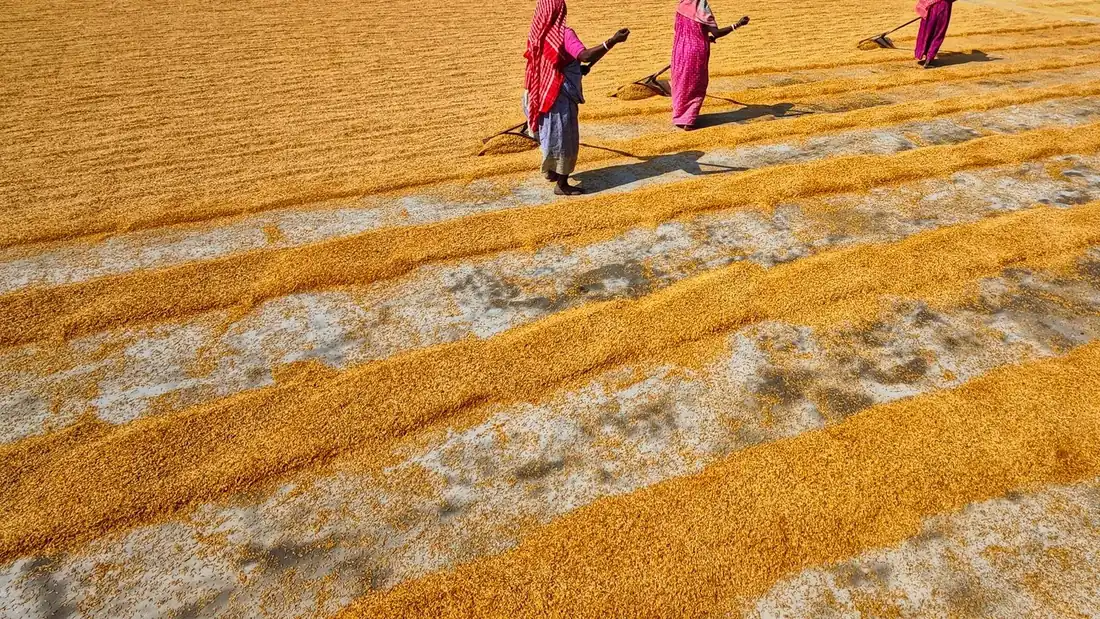
- GSK signed an eight-year agreement with Indian climate company Varaha, structured by Earthly, covering more than 500,000 carbon credits from regenerative agriculture on 50,000 hectares of smallholder farmland in Punjab and Haryana.
- The project is expected to deliver about 100,000 tonnes of removal credits per year between 2028 and 2033, registered under Verra VCS methodology VM0042 (Project 3346), with an upgrade to version 2.2 underway.
- Earlier monitoring across 42,000 hectares reported an estimated 4,574 tonnes of PM2.5 emissions avoided, roughly 59.5 billion litres of water saved, and a 12% to 16% increase in household income for participating farmers.
Why it matters: Long-term offtake agreements for agricultural carbon credits remain rare. Most voluntary market transactions are short-term spot purchases that give project developers little certainty to invest in farmer support, machinery, and measurement infrastructure. An eight-year commitment from a major pharmaceutical company signals that corporate buyers are starting to treat farm-based carbon removals as a strategic procurement category, not a one-off offset purchase. The deal also tests whether carbon finance can solve a public health problem (seasonal crop burning in northern India) by changing the economic incentives that drive it.
What the CCP label question means for buyers
The project is upgrading to VM0042 version 2.2, which the Integrity Council for the Voluntary Carbon Market (ICVCM) has approved as meeting its Core Carbon Principles. That approval applies to the methodology, not automatically to every credit issued under it. Each project still needs to meet additional conditions at verification, including stricter rules on baselines, additionality, leakage, and soil carbon measurement. Whether Project 3346 ultimately earns the CCP label will depend on its performance through those verification steps.
This distinction matters because the voluntary carbon market is splitting into tiers. Credits with a CCP label are expected to command higher prices and face less reputational risk for buyers. Credits without it may still be legitimate but could trade at a discount and attract more scrutiny. For GSK, which says it plans to rely exclusively on carbon removals for its 2045 net-zero target, the quality tier of its credits portfolio is a material question. The company reported that by the end of 2025 it had secured credits covering 8% of expected residual emissions, representing 40% of the credits it anticipates needing.
Agricultural carbon at scale: what remains unresolved
Verra reported in 2025 that around 200 projects were listed under earlier versions of VM0042, with potential supply estimated at 126 million tonnes of reductions and removals per year. That is pipeline, not issued volume, and the gap between the two numbers is where the hard questions sit. Soil carbon changes slowly, varies between fields, and is sensitive to weather and management decisions. A project can report strong results in a monitoring period and see different outcomes in the next one.
The Varaha project’s earlier results (water savings, PM2.5 avoidance, income gains) come from a 42,000-hectare monitoring area. The expansion to 50,000 hectares will test whether those results hold as the project reaches new farmers with different soil types, water access, and willingness to change practices. The quarterly reporting structure (covering carbon, water, income, and community engagement) provides more visibility than most voluntary market deals, but the real test is whether verified credit issuance matches the projected 100,000 tonnes per year.
Who gains and who faces pressure
Smallholder farmers in Punjab and Haryana gain a new income stream and subsidized access to machinery if they shift away from burning. Varaha gains demand certainty to justify scaling its operations. GSK gains a pipeline of removal credits aligned with its 2030 and 2045 targets, sourced from a project with measurable co-benefits it can report alongside its climate disclosures.
On the other side, the deal puts pressure on voluntary market intermediaries selling short-term, low-traceability agricultural credits. If large buyers move toward long-term, methodology-upgraded, directly structured agreements, the market for generic farm offsets may shrink. It also raises the bar for other pharmaceutical and healthcare companies that have not yet disclosed how they plan to source removal credits for residual emissions. GSK’s public commitment, with named project, methodology, and volume, makes vague “carbon neutral” claims from competitors harder to sustain.
There is no newsletter yet. Leave your email and you will hear first on the day there is one.